Bienvenue sur perbal.net
posté le 06.02.08
Cliquez sur les rubriques de gauche pour accéder directement aux informations qui vous intéressent.
Accueil
Musique
Graphisme
Electronique
perbal.net
Liens
Email: 
Facebook 
Behance 
SoundCloud 
3D Pixel Art
Drumtraks Schematics
Thévenin
Statistiques Winamp
Bienvenue sur perbal.net
posté le 06.02.08
Cliquez sur les rubriques de gauche pour accéder directement aux informations qui vous intéressent.
3D Pixel Art
posté le 05.10.2014, mis à jour le 16.10.2023

3D Pixel Art by Bernard Perbal is licensed under a Creative Commons Attribution-ShareAlike 4.0 International License.
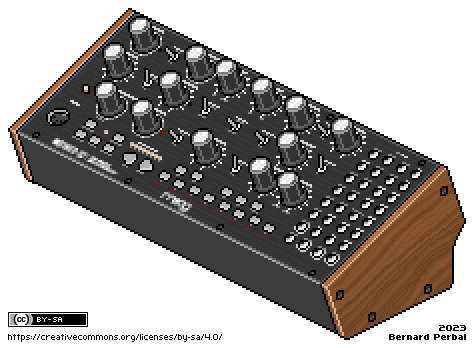

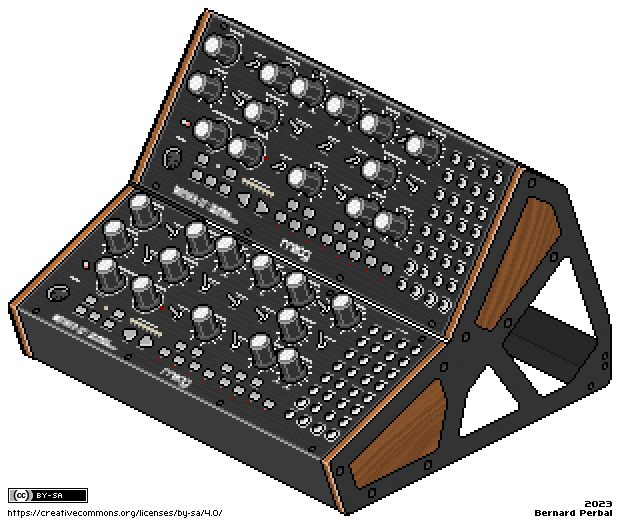
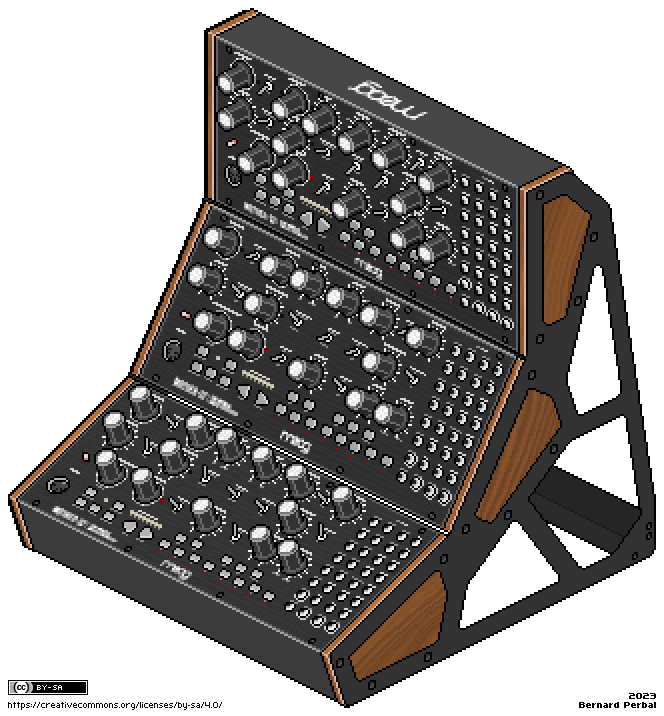
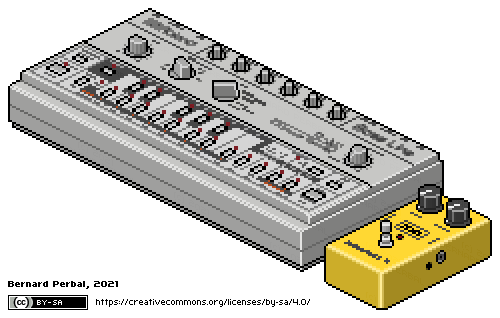
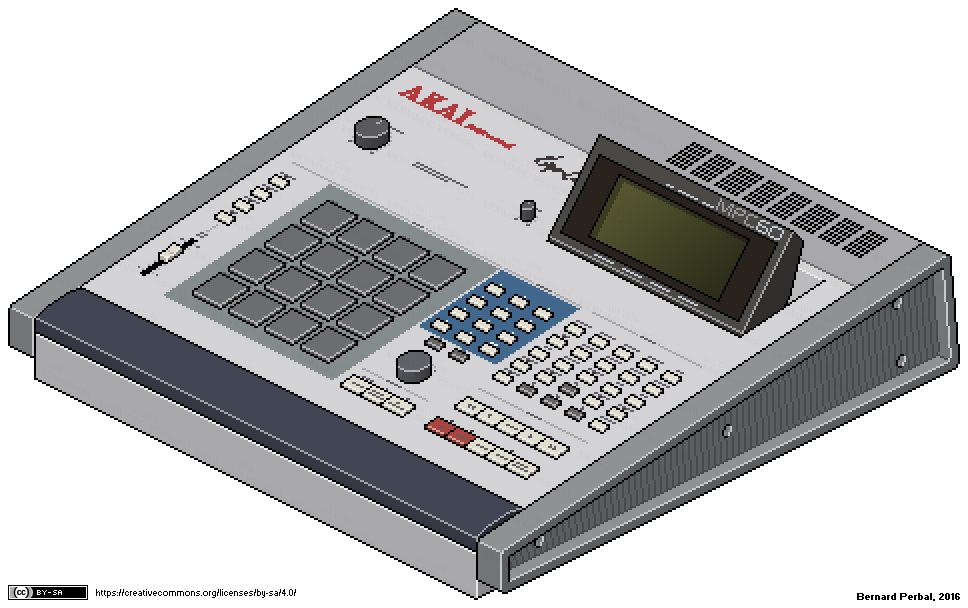
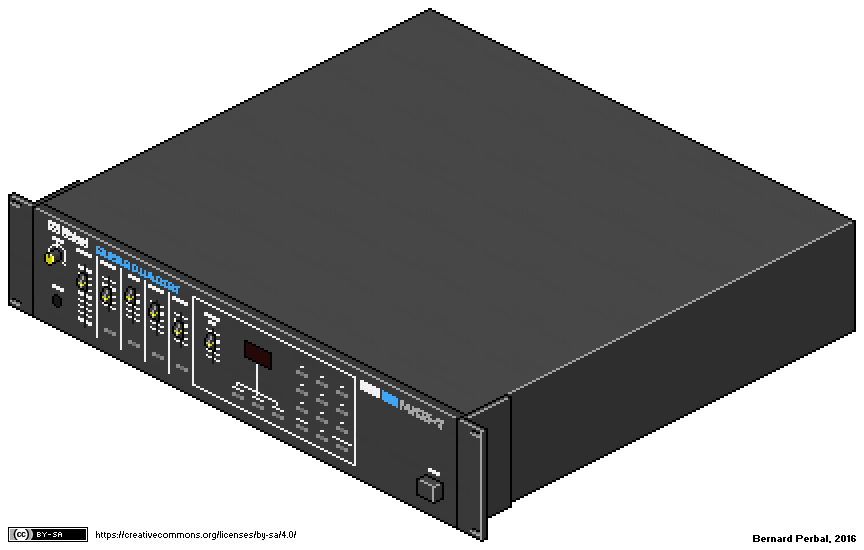
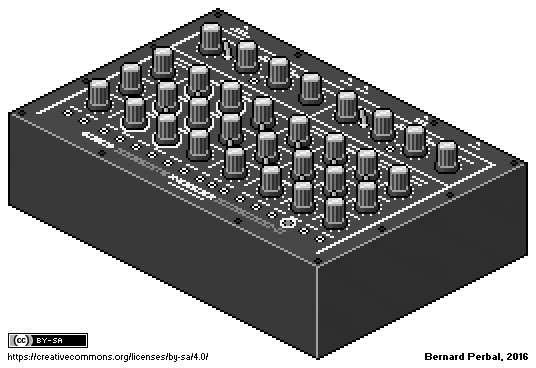
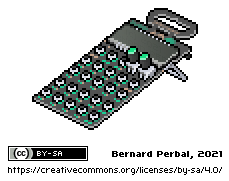
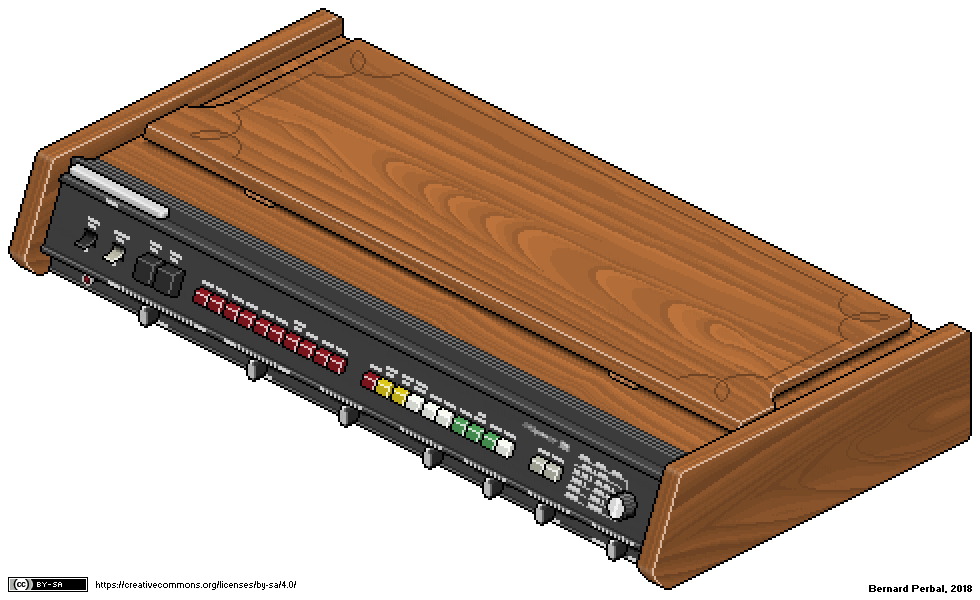
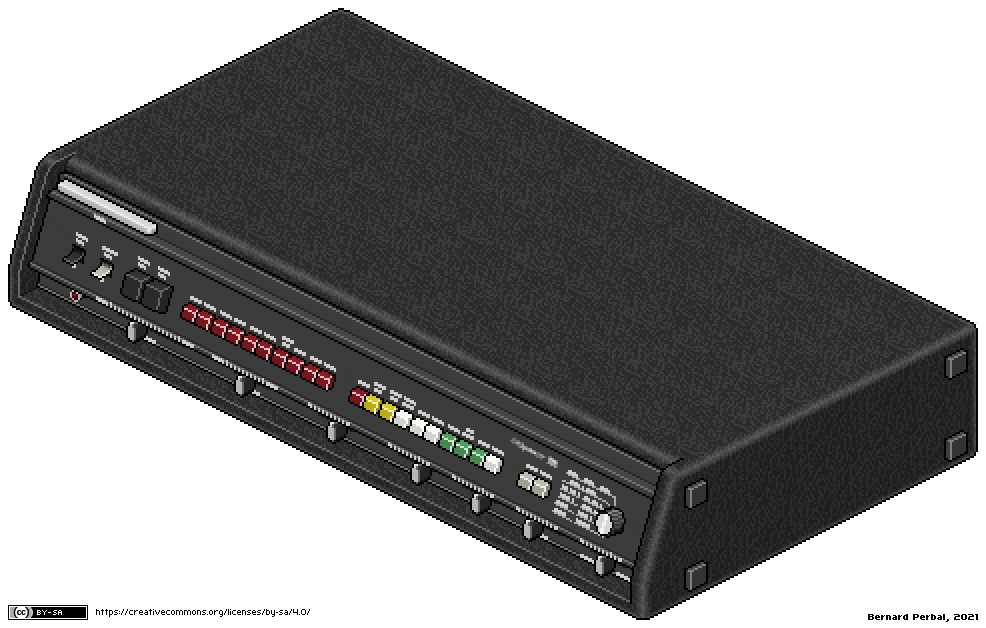
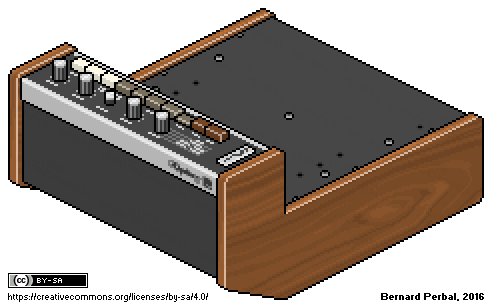
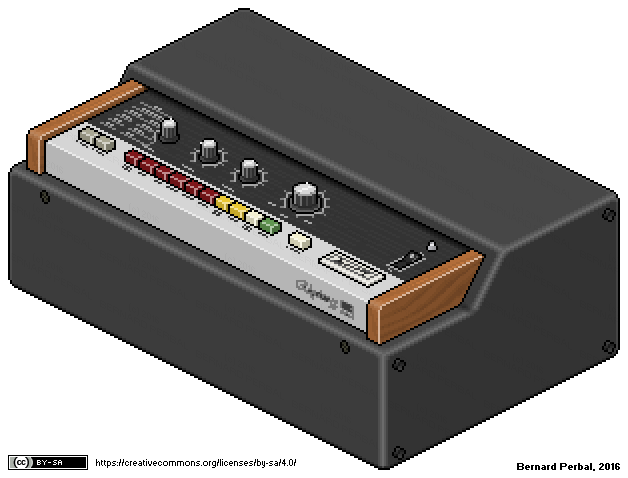
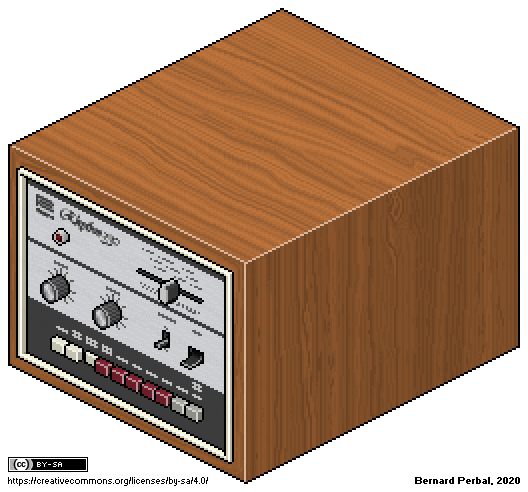
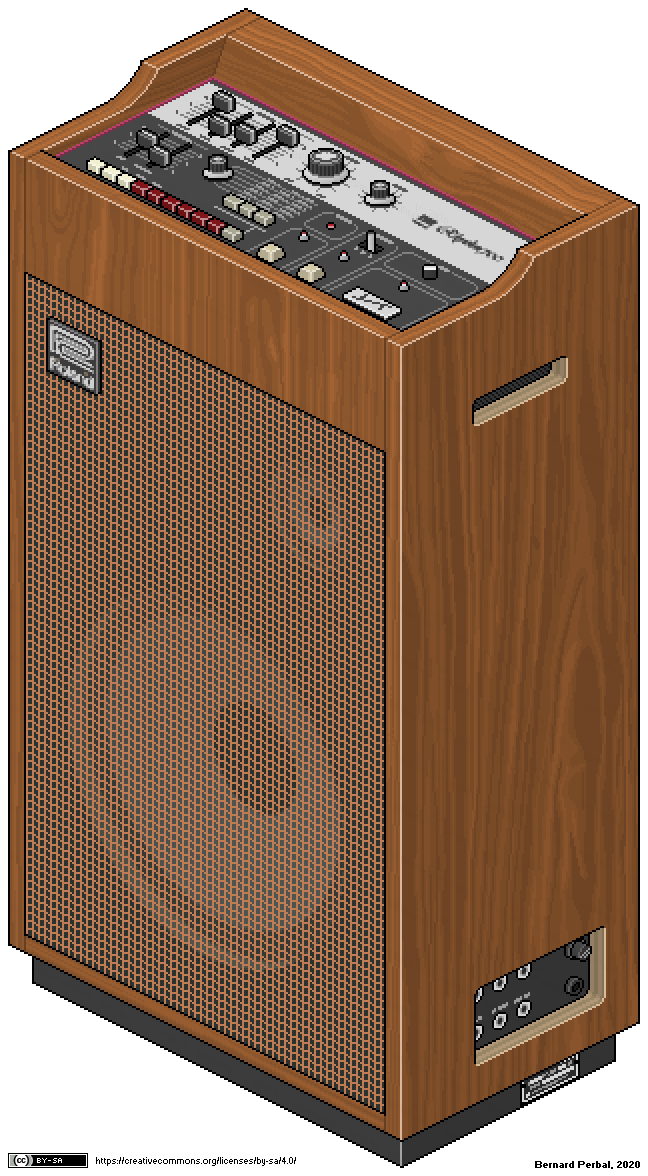
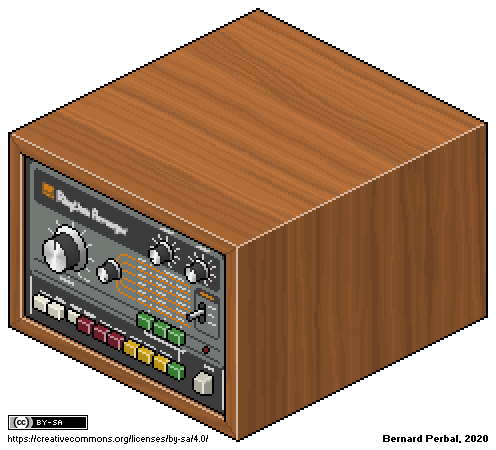
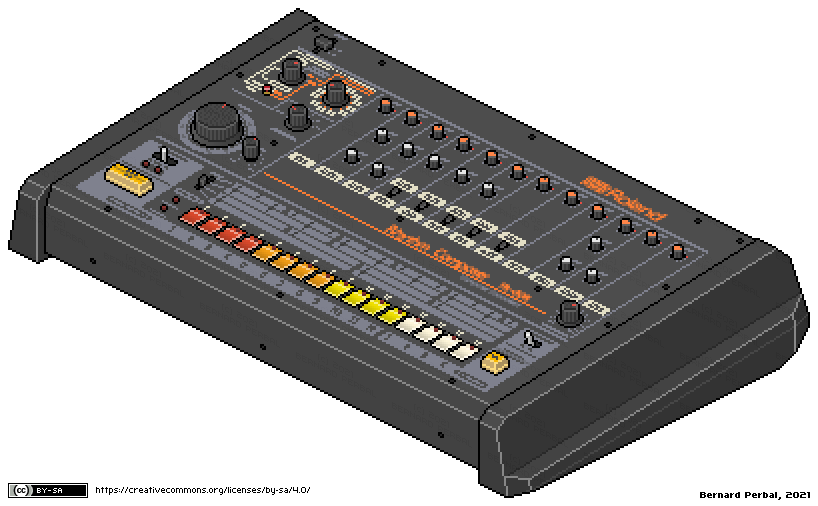
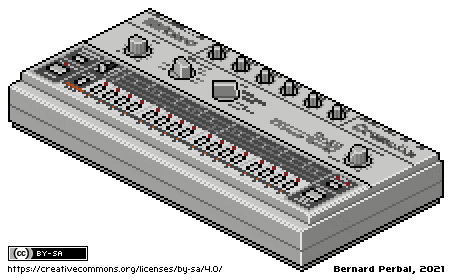
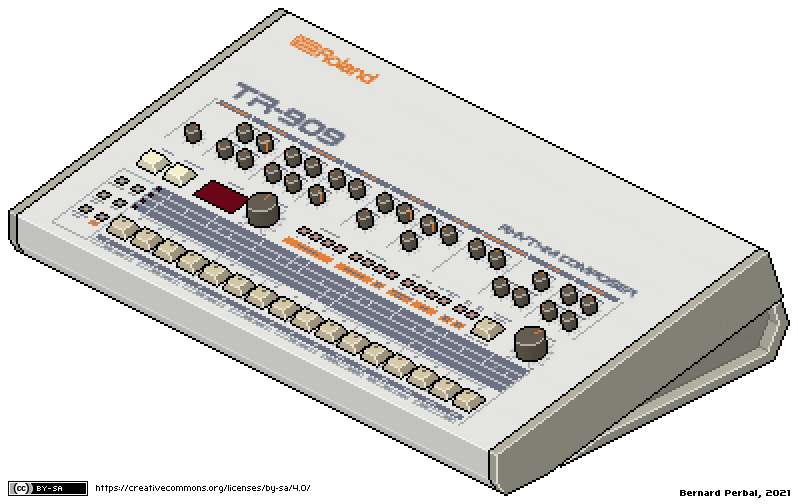

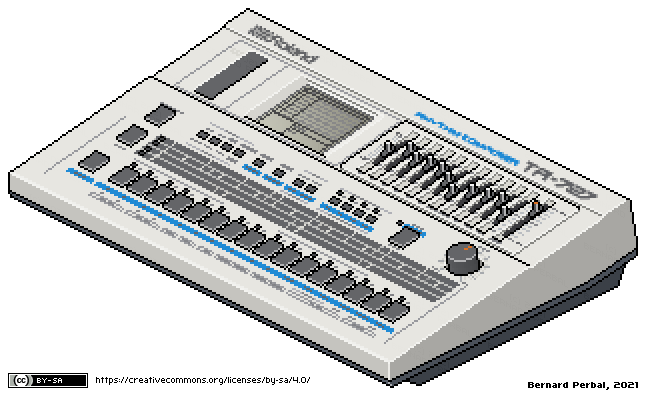
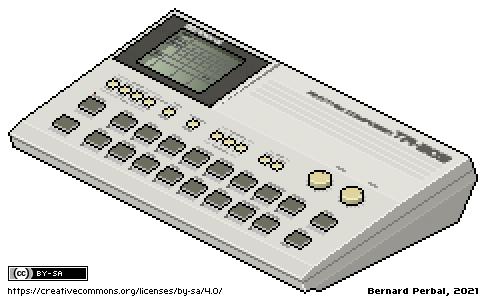
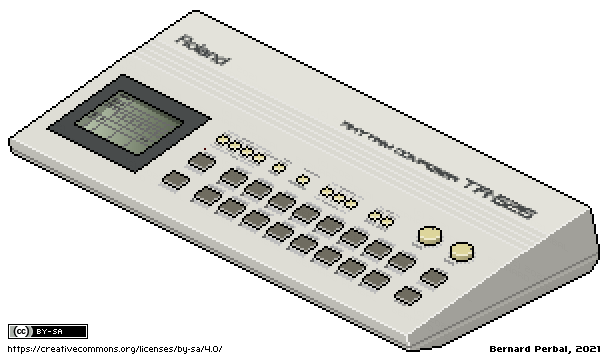
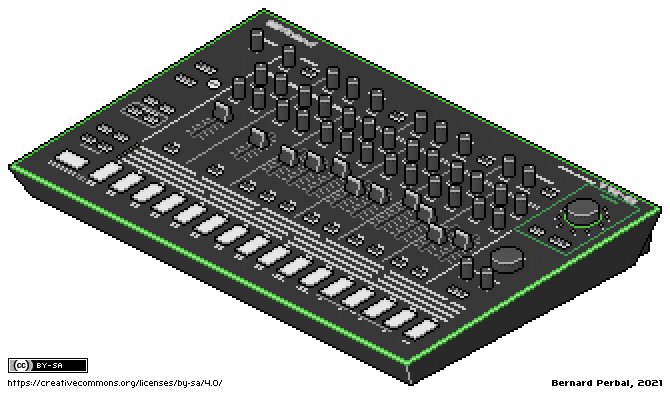
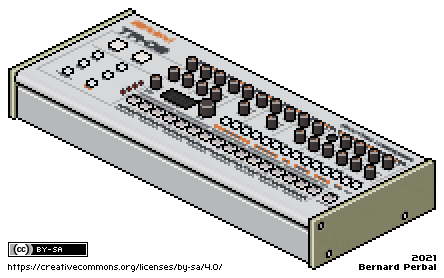
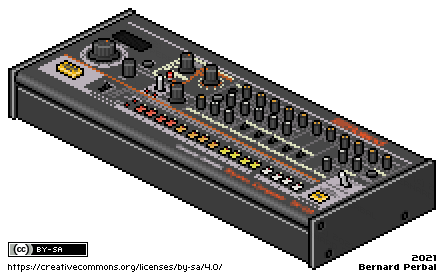
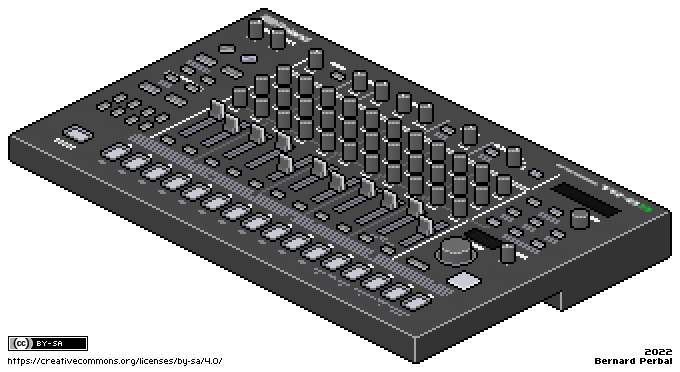
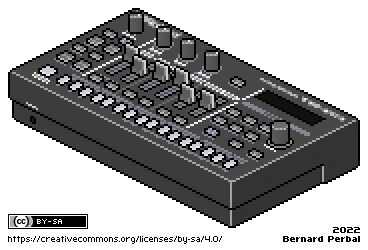
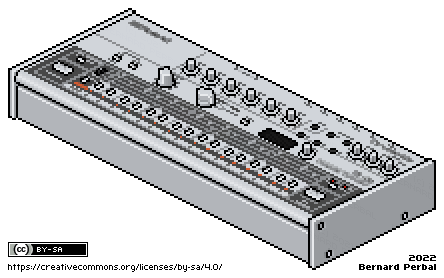
Quelques équipements de mon home studio réalisés en pixel art isométrique : Moog Mother-32 avec support 2 niveaux et 3 niveaux, Roland TB-303 and MXR Distortion+, Akai MPC60, Roland MKS-7, MacBeth Micromac-D, Teenage Engineering Pocket Operator TO-12 Rhythm, Roland TR-77, Roland TR-77V, Roland TR-33, Roland TR-55, Roland TR-330, Roland TR-700, Roland TR-66, Roland TR-808, Roland TR-606, Roland TR-909, Roland TR-707, Roland TR-727, Roland TR-505, Roland TR-626, Roland TR-8, Roland TR-09, Roland TR-08, Roland TR-8S, Roland TR-6S, Roland TR-06.
Sequential Circuits Drumtraks - Correction of I/O Address Annotations in the Service Manual
posted on 04 June 2026, updated on 09 June 2026
Summary
During reverse-engineering and hardware verification of a Sequential Circuits Drumtraks, I found that the I/O address annotations printed on the commonly circulated schematic appear to be incorrect.
The actual hardware decoding performed by U214 (74LS138) does not match the annotated addresses shown on the schematic.
This conclusion is based on:
Hardware Verification
U214 Address Decoder
U214 is a HD74LS138P (standard 74LS138).
Continuity measurements performed directly on the motherboard confirm:
| U214 Pin | Function | Connected To |
|---|---|---|
| 1 | A | Z80 A2 (pin 32) |
| 2 | B | Z80 A3 (pin 33) |
| 3 | C | Z80 A4 (pin 34) |
| 6 | G1 | Z80 A7 (pin 37) |
| 5 | /G2B | Z80 /M1 through LS04 inverter |
The /M1 path was verified:
Z80 pin 27 (/M1)
→
74LS04 pin 5
74LS04 pin 6
→
U214 pin 5 (/G2B)
Therefore the LS138 is enabled only during I/O cycles and not during instruction fetches.
LS138 Output Verification
Continuity measurements confirm:
| LS138 Output | Pin | Signal |
|---|---|---|
| Y0 | 15 | /OLEDS |
| Y1 | 14 | /OSINK |
| Y2 | 13 | /ODAC |
| Y3 | 12 | /OTRIGB |
| Y4 | 11 | /OTRIGA |
| Y5 | 10 | /OMISC |
| Y6 | 9 | /OSHMUX |
| Y7 | 7 | /OCNTR |
All outputs were verified on the physical motherboard.
LS138 Truth Table
Because:
| A | = | Z80 A2 |
| B | = | Z80 A3 |
| C | = | Z80 A4 |
and because the 74LS138 selects outputs according to:
| C | B | A | Output |
|---|---|---|---|
| 0 | 0 | 0 | Y0 |
| 0 | 0 | 1 | Y1 |
| 0 | 1 | 0 | Y2 |
| 0 | 1 | 1 | Y3 |
| 1 | 0 | 0 | Y4 |
| 1 | 0 | 1 | Y5 |
| 1 | 1 | 0 | Y6 |
| 1 | 1 | 1 | Y7 |
the actual decoded ports are:
| Address | Function |
|---|---|
| E0 | /OLEDS |
| E4 | /OSINK |
| E8 | /ODAC |
| EC | /OTRIGB |
| F0 | /OTRIGA |
| F4 | /OMISC |
| F8 | /OSHMUX |
| FC | /OCNTR |
Note that A6, A5, A1 and A0 are not decoded.
Therefore each function responds to multiple port addresses.
The addresses shown above are simply the canonical addresses used by the firmware.
Comparison with Published Schematic Annotations
Many copies of the Drumtraks schematic contain annotations similar to:
/OSHMUX @ E4H /OMISC @ E8H /OTRIGA @ ECH /OTRIGB @ F0H /OSINK @ F8H /OLEDS @ FCH
These annotations are inconsistent with the verified hardware decoding.
The corrected table is:
| Signal | Annotated Address | Verified Address |
|---|---|---|
| /OLEDS | FCH | E0H |
| /OSINK | F8H | E4H |
| /ODAC | F4H | E8H |
| /OTRIGB | F0H | ECH |
| /OTRIGA | ECH | F0H |
| /OMISC | E8H | F4H |
| /OSHMUX | E4H | F8H |
| /OCNTR | E0H | FCH |
Probable Cause of the Error
The annotated addresses appear to have been calculated assuming:
LS138 A <- A4 LS138 B <- A3 LS138 C <- A2
while the actual motherboard wiring is:
LS138 A <- A2 LS138 B <- A3 LS138 C <- A4
This produces exactly the observed reversal.
ROM Analysis (OS v0.5)
The ROM starts with:
0000: 3E 0F LD A,0FH 0002: D3 E4 OUT (E4H),A 0004: ED 56 IM 1
Initially this seemed to suggest that E4H must correspond to /OSHMUX.
However hardware verification proves that:
E4H → /OSINK
The first firmware output therefore targets the keyboard/LED scan circuitry.
Understanding the First OUT (E4H)
/OSINK drives the W/D (Write/Disable) inputs of two addressable latches:
U105 = 4099 U107 = 4099
The byte written to E4H is decoded as:
0FH = 00001111
For U107:
Address = 111 Data = 1
Therefore:
Q7 <- 1
A particularly interesting detail is that:
Q7(U107)
→
RES(U105)
RES(U107)
Thus the first firmware output immediately establishes a known reset state for the scan latches.
This makes far more sense than the previous assumption that E4H controlled the sample-and-hold multiplexer.
Conclusion
The physical motherboard, continuity measurements, LS138 truth table, and firmware analysis all support the following I/O map:
| Port | Function | Hardware Controlled |
|---|---|---|
| E0H | OLEDS | Two 4042 latch circuits (U102 and U103) driving the LED matrix |
| E4H | OSINK | Two 4099 addressable latches controlling the LED matrix (U105) and switch matrix (U107) |
| E8H | ODAC | 7524 DAC digital-to-analog converter (U226) |
| ECH | OTRIGB | Hex D-type Flip-Flop 4174 - Trigger Latch B (U219) |
| F0H | OTRIGA | Hex D-type Flip-Flop 4174 - Trigger Latch A (U217) |
| F4H | OMISC | Hex D-type Flip-Flop 4174 - Misc Output Latch (U216) |
| F8H | OSHMUX | Hex D-type Flip-Flop 4174 - Sample & Hold Address / Strobe Latch (U218) |
| FCH‑FFH | OCNTR | Intel 8253 Programmable Interval Timer (U211) |
The commonly circulated schematic annotations appear to contain a systematic reversal of the LS138 address bit order.
Additional Note Regarding the 8253 Timer (U211)
Unlike the other decoded devices, the Intel 8253 Programmable Interval Timer occupies four consecutive I/O addresses:
| Address | Function |
|---|---|
| FCH | Counter 0 |
| FDH | Counter 1 |
| FEH | Counter 2 |
| FFH | Control Register |
This is possible because the LS138 output OCNTR only generates the chip-select signal for U211.
The lower address bits A0 and A1 are connected directly to the 8253 address inputs and are therefore used internally by the timer to select one of its four registers.
Consequently, all addresses from FCH through FFH activate the same device (U211), while the specific operation performed depends on the values present on address lines A0 and A1.
This behavior differs from the other Drumtraks I/O devices, which ignore address lines A0 and A1 and therefore respond identically to all four addresses within their decoded address range.
Observations Regarding U212 (74LS04)
During the verification process, an additional discrepancy was found between the published schematic annotations and the actual motherboard wiring around U212 (74LS04).
Continuity measurements confirmed:
Z80 pin 27 (/M1)
→
U212 pin 5
U212 pin 6
→
U214 pin 5 (/G2B)
and:
U216 pin 12
→
U212 pin 13
U212 pin 12
→
CC OUT (via R222)
The available schematic annotations appear to interchange these two inverter sections.
While this discrepancy does not affect circuit operation, it demonstrates that some annotations in the available documentation should be independently verified against the physical hardware.
Exemple de schéma équivalent Thévenin dans le livre The Art Of Electronics de Horowitz and Hill
posté le 30.05.26
L'ouvrage The Art of Electronics de Paul Horowitz et Winfield Hill est largement considéré comme une référence incontournable en électronique pratique. Son premier chapitre présente les notions fondamentales relatives aux résistances et aux sources de tension.
La sous-section 1.2.5 est consacrée au théorème de Thévenin, selon lequel tout réseau linéaire composé de résistances et de sources de tension peut être remplacé par un circuit équivalent constitué d'une unique source de tension VTh en série avec une unique résistance RTh.
Le théorème s'applique aux réseaux linéaires. Les circuits comportant des composants non linéaires (diodes, transistors en régime non linéaire, etc.) nécessitent des précautions supplémentaires.
RTh représente la résistance interne vue depuis les bornes de sortie du réseau. Elle traduit la capacité du circuit à fournir du courant sans que sa tension ne s'effondre.
Ce principe est illustré par le schéma ci-après, lequel ne correspond pas à un montage réel ayant une utilité pratique particulière.
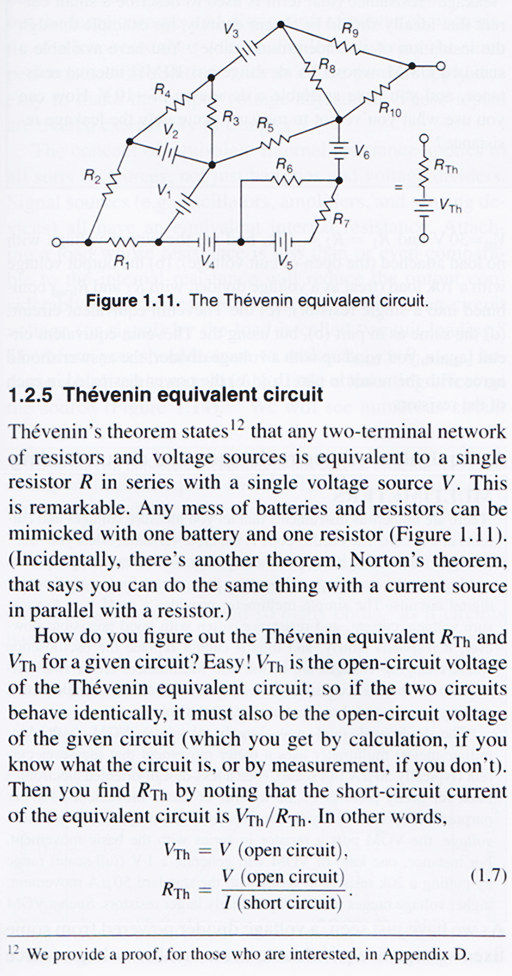
Il m'a semblé intéressant, à titre d'exercice, de déterminer l'équivalent de Thévenin (VTh et RTh) de ce réseau en attribuant arbitrairement des valeurs à chacun de ses composants.
A cette fin, les résistances R1 à R10 seront définies avec des valeurs comprises entre 100 Ω et 1000 Ω. De même, les tensions des sources V1 à V6 seront comprises entre 1 V et 6 V, en respectant les polarités indiquées sur le schéma.
L'équivalent de Thévenin sera calculé entre les points A et B. Pour faciliter les calculs, le potentiel de référence (0 V) sera arbitrairement placé au point E.
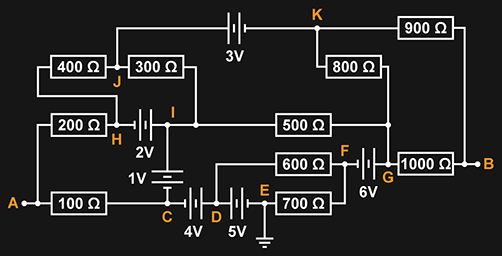
Première étape : calcul de la résistance équivalente RTh. Pour cela, il suffit de remplacer toutes les sources de tension par des conducteurs parfaits (résistance nulle), puis de remplacer les associations de résistances en série ou en parallèle par leurs résistances équivalentes.
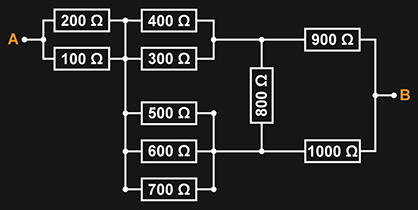
En réduisant les groupes de résistances en parallèle à leur résistance équivalente, nous obtenons :
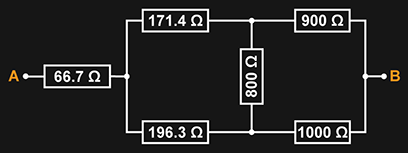
Ensuite, nous allons transformer les trois résistances de droite, disposées en triangle (800 Ω, 900 Ω et 1000 Ω), en leur équivalent en étoile. Nous obtenons alors :
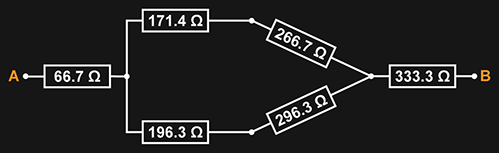
Ce qui donne :

En additionnant les valeurs de toutes ces résistances, nous obtenons la valeur de la résistance équivalente de Thévenin :
RTh = 631,9 Ω
Pour le calcul de la source de tension équivalente de Thévenin, nous allons conserver la transformation des trois résistances de 800 Ω, 900 Ω et 1000 Ω en leur équivalent en étoile. Le nouveau circuit est le suivant :
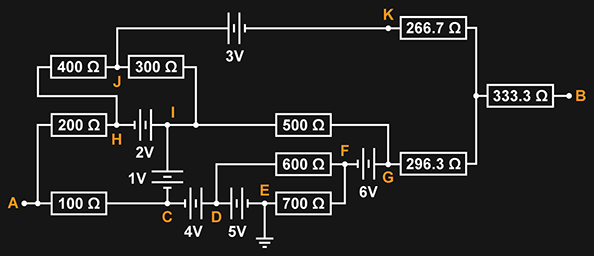
Notons que la tension au point situé entre les deux résistances de 266,7 Ω et 296,3 Ω est égale à la tension du point B, car ce point n'est relié à aucun élément du circuit. Aucun courant ne circule donc dans la résistance de 333,3 Ω.
Les tensions des points suivants sont facilement établies :
| VE = | 0.000 V | Réf |
| VD = | 5.000 V | |
| VC = | 1.000 V | VE - 4 V |
| VI = | 2.000 V | VC + 1 V |
| VH = | 0.000 V | VI - 2 V |
Au point A, nous avons :
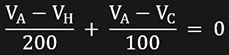
En remplaçant les valeurs connues de VH et VC, nous trouvons VA :
| VA = | 0.667 V |
Notons les points suivants :
| VG = | VF + 6 |
| VJ = | VK + 3 |
Au point K, nous avons :

Exprimons VK en fonction de VB :


Au point G, nous avons :

Exprimons VG en fonction de VB :


Au point B, nous avons :
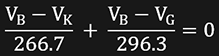
En remplaçant les valeurs de VK et VG, calculées ci-dessus, nous trouvons la valeur de VB : 1.872 V
La valeur de la tension équivalente de Thévenin est donnée par VTh = VA - VB.
L'équivalent de Thévenin de ce circuit est donné par les valeurs suivantes :
VTh = -1,206 V
RTh = 631,9 Ω
Statistiques Winamp
posté le 03.01.09
Statistiques des morceaux joués avec Winamp depuis le 26.12.08
Artiste : Ital Tek
Cumul des Morceaux Joués : 366
Nombre De Morceaux : 85
Taux : 4.31
Morceaux Joués :
Ital Tek - Time Burns Heavy joué 13 fois
Ital Tek - Open Heart joué 13 fois
Ital Tek - Endless joué 12 fois
Ital Tek - Bladed Terrain joué 12 fois
Ital Tek - The Lake joué 11 fois
Ital Tek - Angel In Ruin joué 11 fois
Ital Tek - Dust Covers Earth joué 10 fois
Ital Tek - Chamber Music joué 10 fois
Ital Tek - Reverie joué 10 fois
Ital Tek - Oblivion Theme joué 10 fois
Ital Tek - Before joué 9 fois
Ital Tek - Granite And Glass joué 9 fois
Ital Tek - Hazed joué 9 fois
Ital Tek - Seraph joué 8 fois
Ital Tek - Deletion Quarter joué 8 fois
Ital Tek - Trace joué 8 fois
Ital Tek - Piercer joué 7 fois
Ital Tek - For You There Is No Time joué 7 fois
Ital Tek - Diamond Child joué 7 fois
Ital Tek - Leaving The Grid joué 7 fois
Ital Tek - Death By A Thousand Cuts joué 6 fois
Ital Tek - Deadhead joué 6 fois
Ital Tek - Wintered joué 6 fois
Ital Tek - Altered Rainbow joué 5 fois
Ital Tek - Darking joué 5 fois
Ital Tek - Dream Boundary joué 5 fois
Ital Tek - Nocturn joué 5 fois
Ital Tek - Vacuum I joué 5 fois
Ital Tek - Murmur joué 5 fois
Ital Tek - Untethered joué 4 fois
Ital Tek - Pulling Teeth joué 4 fois
Ital Tek - Zero Point joué 4 fois
Ital Tek - The Next Time You Die joué 4 fois
Ital Tek - One Eye Open joué 4 fois
Ital Tek - Cold Motion joué 4 fois
Ital Tek - Isolation Waves joué 4 fois
Ital Tek - Sanctum joué 4 fois
Ital Tek - Until The End Of Time joué 4 fois
Ital Tek - The Ice Is Thin joué 3 fois
Ital Tek - A Hidden Path joué 3 fois
Ital Tek - Kill Switch joué 3 fois
Ital Tek - Staggered joué 3 fois
Ital Tek - Timeproof joué 3 fois
Ital Tek - The Mirror joué 3 fois
Ital Tek - Cipher joué 3 fois
Ital Tek - Vanta joué 3 fois
Ital Tek - Reflection Through Destruction joué 3 fois
Ital Tek - Beyond Sight joué 3 fois
Ital Tek - Nex joué 3 fois
Ital Tek - Undertow joué 2 fois
Ital Tek - Memory Leak joué 2 fois
Ital Tek - Mind Abandon joué 2 fois
Ital Tek - Misted joué 2 fois
Ital Tek - Never Doubt joué 2 fois
Ital Tek - Phantom Pain joué 2 fois
Ital Tek - Heart String joué 2 fois
Ital Tek - Hymnal joué 2 fois
Ital Tek - Blood Rain joué 2 fois
Ital Tek - Lithic joué 2 fois
Ital Tek - Fragility joué 2 fois
Ital Tek - Become Real joué 2 fois
Ital Tek - Across Time joué 2 fois
Ital Tek - Prima joué 2 fois
Ital Tek - Bodied joué 2 fois
Ital Tek - Utter joué 2 fois
Ital Tek - Cobra joué 2 fois
Ital Tek - Aquamarine joué 2 fois
Ital Tek - Memory Shard joué 2 fois
Ital Tek - War Of The Ants joué 2 fois
Ital Tek - The Planet joué 2 fois
Ital Tek - East District joué 2 fois
Ital Tek - The Pull joué 1 fois
Ital Tek - Imagined Landscape joué 1 fois
Ital Tek - The Circle Is Complete joué 1 fois
Ital Tek - Adrift joué 1 fois
Ital Tek - Vesper joué 1 fois
Ital Tek - Jenova joué 1 fois
Ital Tek - Terminus joué 1 fois
Ital Tek - Redeemer joué 1 fois
Ital Tek - A Delicate Balance joué 1 fois
Ital Tek - Days Illusion joué 1 fois
Ital Tek - Radon Cry joué 1 fois
Ital Tek - Particle Zoo joué 1 fois
Ital Tek - Skyline joué 1 fois
Ital Tek - Whip It Up joué 1 fois
© 2008-2026 perbal.net